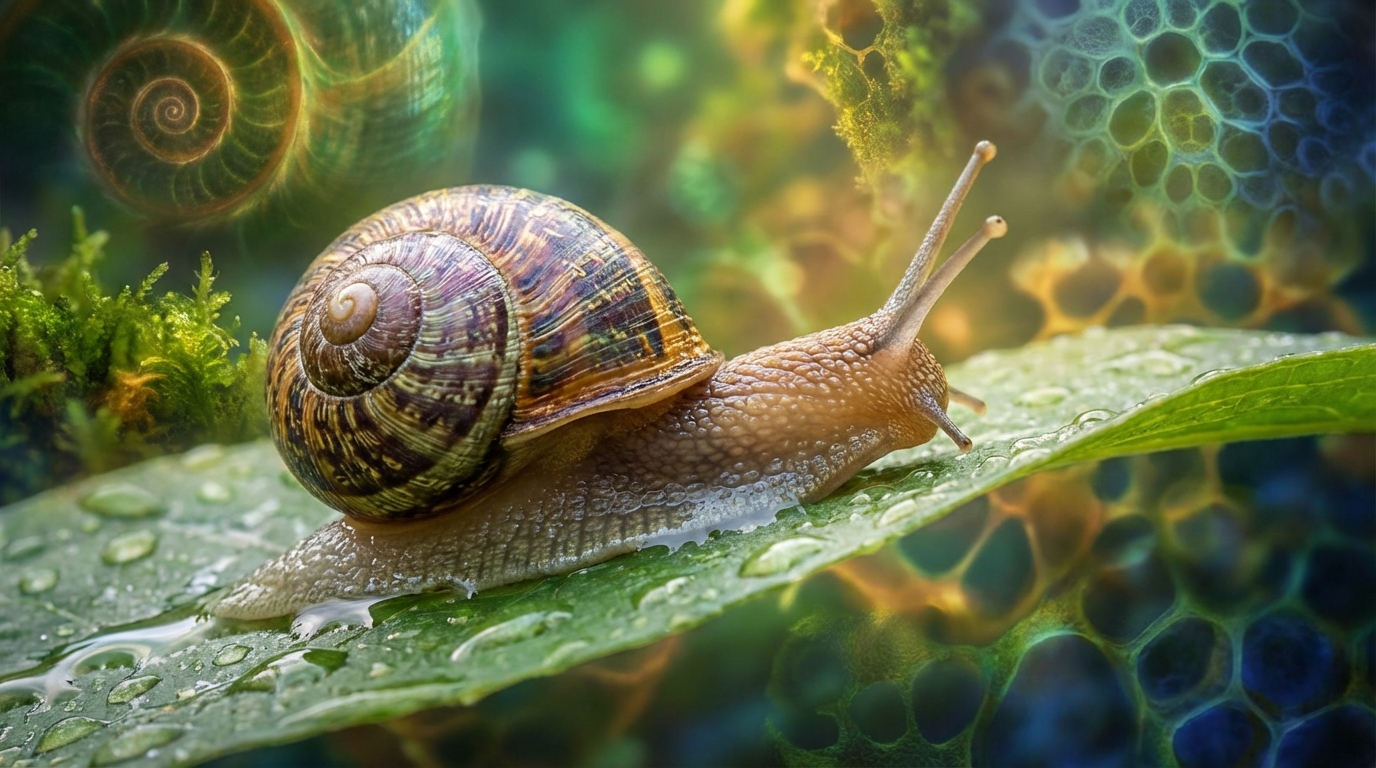
Most gardeners see a snail and immediately think of a pest. I get it. I once lost an entire crop of prize-winning marigolds to a single, slow-moving army of them in one damp week. It was frustrating, to say the least. But when you stop looking at them as just another thing to get rid of, you start to realize that garden snail facts are some of the weirdest and most impressive in the natural world. These little guys are essentially biological tanks with features that look like they belong in a sci-fi movie.
You might think they’re just slow and slimy. But did you know they have thousands of teeth? Or that they can basically put themselves into a coma for years if the weather gets too rough? Understanding how these creatures work is the first step toward managing your garden better. It’s not about winning a war against them. It’s about knowing your local ecosystem. And honestly, once you hear about their superpowers, you might actually start to respect them, even if you still don’t want them on your hostas.
- Snails possess roughly 14,000 microscopic teeth used for scraping food.
- They can enter a deep sleep state for up to 3 years to survive drought.
- Their mucus acts as a non-Newtonian fluid, protecting them from sharp edges.
- Most garden snails are hermaphrodites, meaning they have both male and female organs.
- They have a strong homing instinct and can find their way back to a specific spot.
How snails use thousands of teeth to eat your plants
When you look at a snail, you don’t see a mouth full of fangs. But don’t let the lack of a visible jaw fool you. These creatures have a specialized feeding organ called a radula. It’s essentially a tongue covered in rows and rows of tiny, chitinous teeth. Depending on the species, we are talking about roughly 14,000 teeth. It works like a microscopic rasp or a biological chainsaw. They don’t bite pieces out of your lettuce. They scrape the surface layer by layer until there’s nothing left.
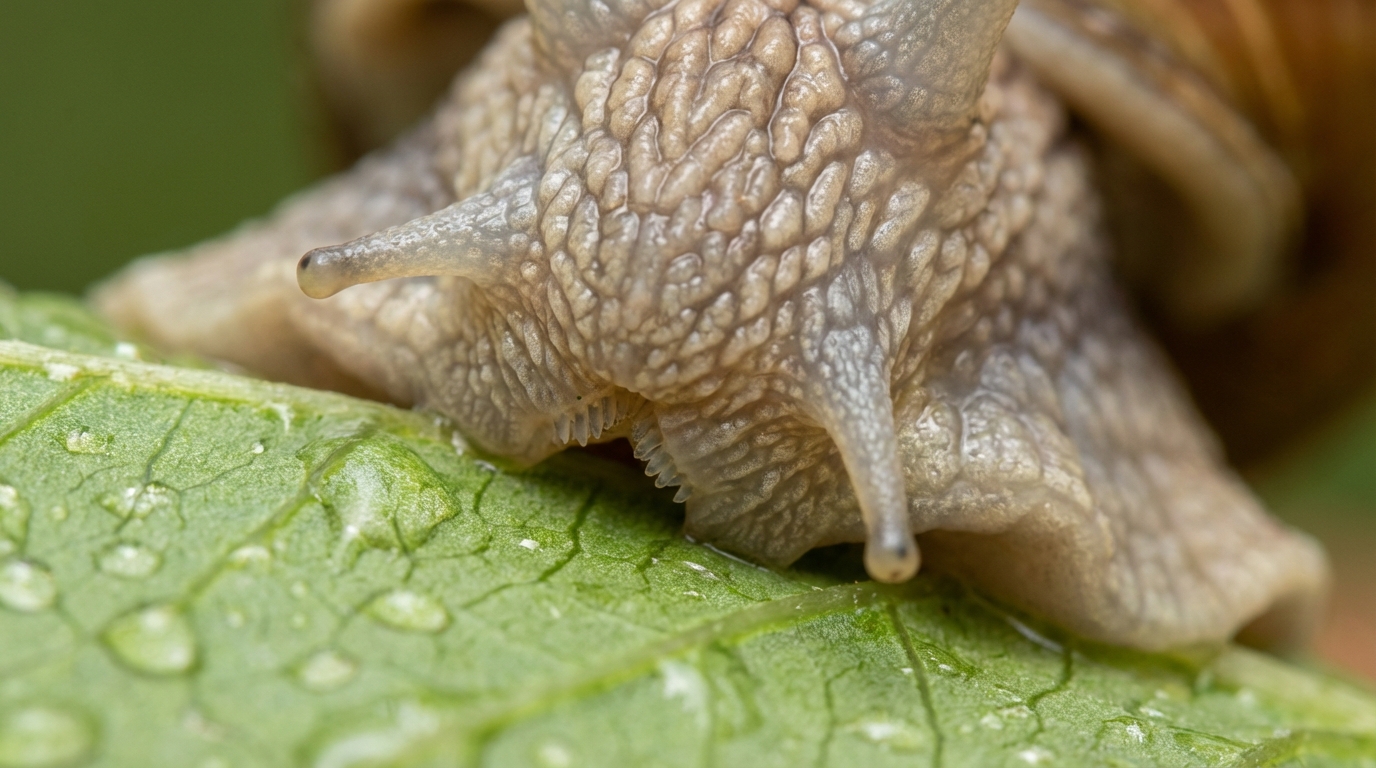
This is why snail damage looks different from a clean bite from a rabbit or a deer. It usually starts as a thinning of the leaf or small, irregular holes. They’re literally sanding down your garden. I’ve found that this high-intensity scraping is why they’re so good at cleaning algae off pots too. They aren’t picky eaters, but they are very efficient ones. If you’ve ever wondered how such a small creature can clear a seedling tray overnight, it’s that mechanical radula at work. It’s a powerhouse of a tool that never really gets blunt because they constantly grow new teeth to replace the old ones.
Why they need so much calcium
Because their teeth and their shells are so robust, snails have a massive physical requirement for calcium. If your soil is rich in calcium, you’ll likely see more snails with thicker, harder shells. I’ve noticed in my own yard that areas with old masonry or crushed eggshells often attract more activity. They’re literally mining the garden for building materials. If you want to keep them away from specific plants, sometimes providing a calcium source elsewhere can actually distract them, though it’s a risky game to play.
Why garden snails can sleep for years at a time
Nature has a way of dealing with tough conditions, but the snail’s method is extreme. If it gets too hot or too dry, they don’t just find shade. They go into a state called estivation. They retreat into their shells and seal the opening with a thick layer of dried mucus called an epiphragm. This seal keeps the moisture inside and the heat outside. In this state, a garden snail can survive for up to three years. It’s a biological pause button that is nearly unmatched in the animal kingdom.
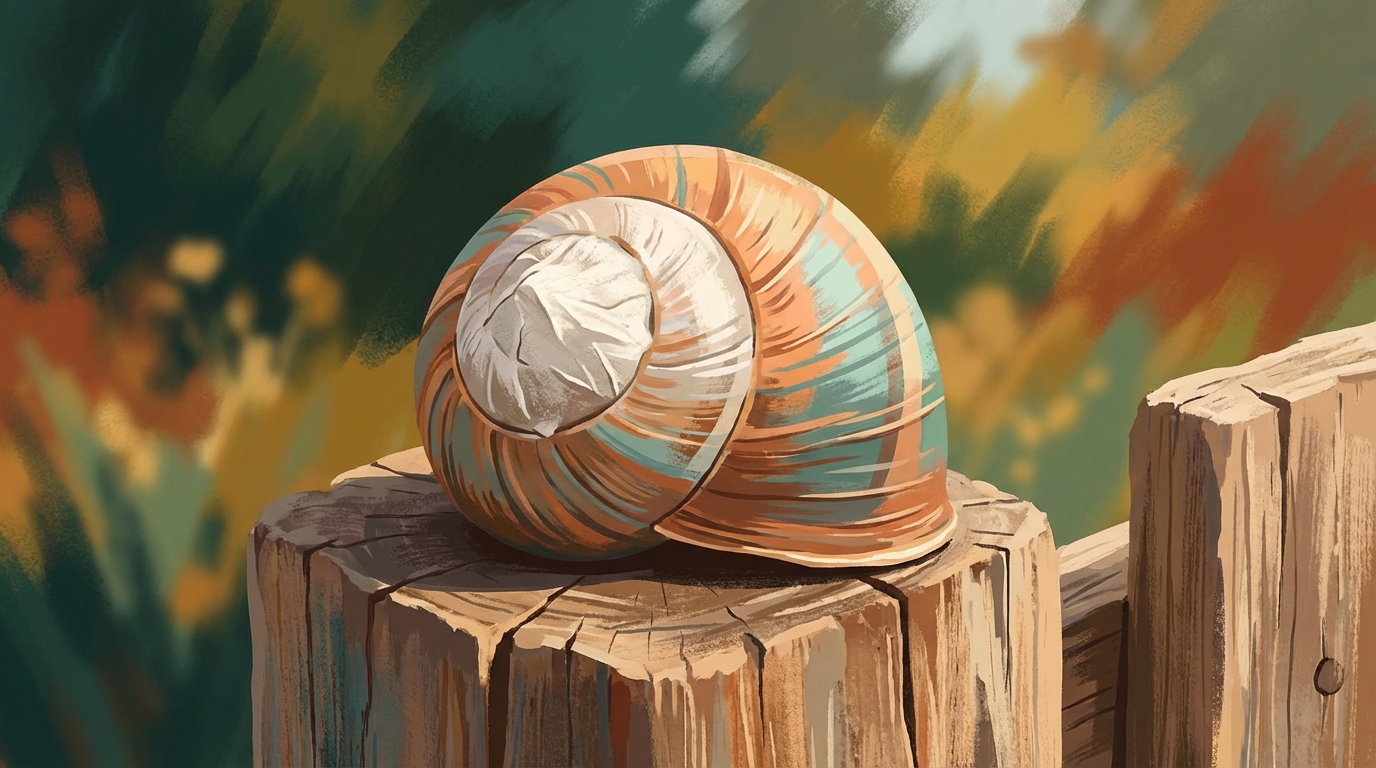
Think about that for a second. While you’re out there worrying about your watering schedule during a drought, the snails are just napping. They’re waiting for the humidity to hit a specific level before they wake up. This is why you’ll see a sudden explosion of snails after a big rainstorm following a long dry spell. They didn’t just move in. They’ve been there the whole time, stuck to the side of your fence or buried an inch under the mulch, just waiting for the alarm clock to go off. It’s a survival strategy that makes them incredibly difficult to fully eradicate from a landscape.
The high tech science behind snail slime
We’ve all seen the silver trails on the porch. Most people find it gross, but that mucus is a legitimate engineering marvel. It’s a non-Newtonian fluid. This means it can act like a solid or a liquid depending on how much pressure is applied to it. This allows the snail to move over a sharp razor blade without getting a single cut. The slime forms a protective, high-friction cushion that is both a lubricant and a glue. It’s what allows them to defy gravity and crawl straight up a glass window or hang upside down from a leaf.
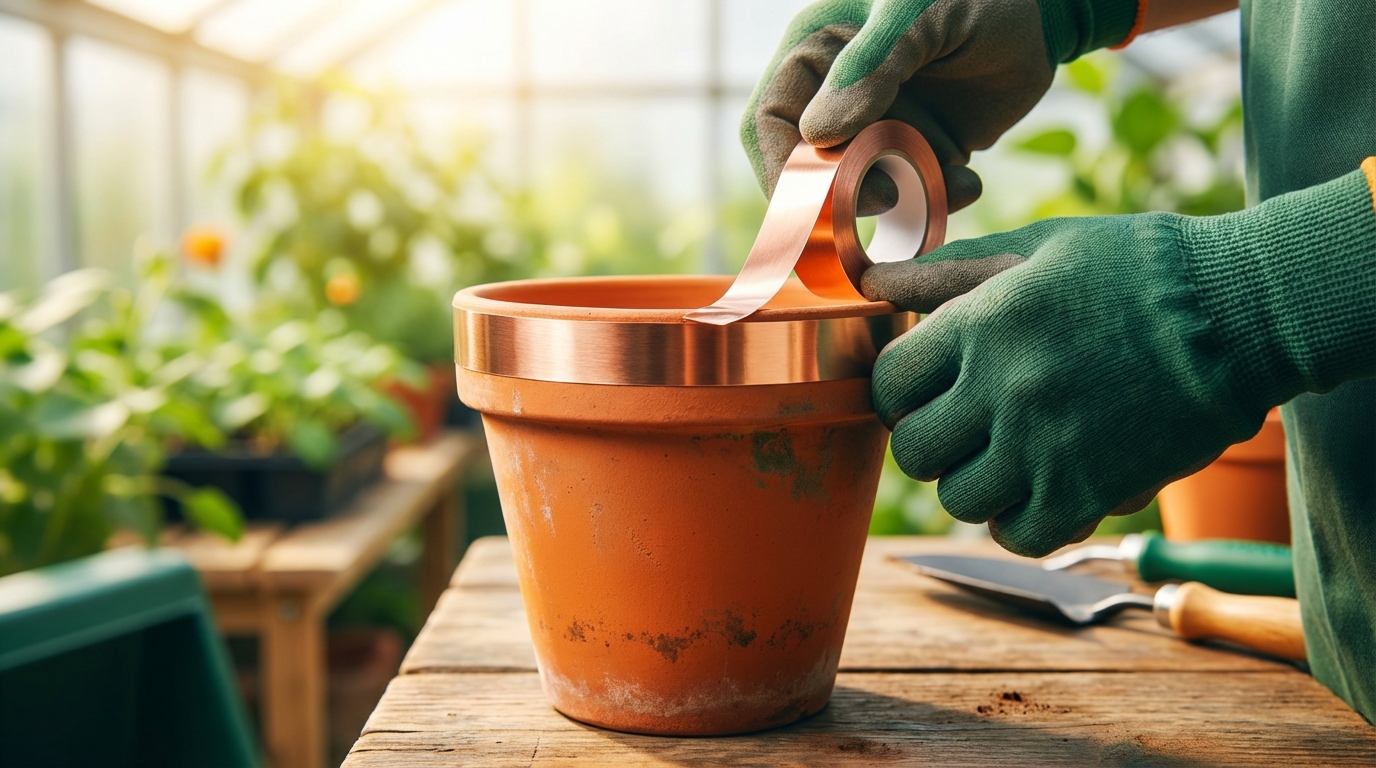
In my experience, this slime is also their primary communication tool. It’s loaded with pheromones. One snail can follow the trail of another to find food or a mate. It’s like a biological GPS system laid out in shimmering lines. But there’s a downside for the snail. Producing that much mucus requires a massive amount of water. This is why you only see them active at night or during damp weather. If they run out of moisture to make slime, they’re stuck. That’s why copper tape works as a barrier. The reaction between the slime and the copper creates a tiny electric charge that they hate. It’s like a high-tech security fence for your plants.

Understanding how snails find their way back home
Here is a fact that most people find hard to believe. Snails have a homing instinct. If you pick up a snail and throw it over your neighbor’s fence (not that I’m suggesting you do that), there’s a good chance it will find its way back to your garden. Studies have shown that they have a preferred home base where they sleep and hide. They use a combination of smell and their own slime trails to navigate back to their favorite spots. It’s not just random wandering. They know exactly where your best lettuce is, and they know the safest path to get there.
This is why simple relocation often doesn’t work. I once tried moving a group of snails to a nearby park about 20 yards away. Within two nights, I saw the same distinctive cracked shells back on my hydrangea. If you’re going to move them, you have to move them far enough away that they can’t catch the scent of their home turf. Otherwise, you’re just giving them a workout. They are surprisingly determined travelers when they have a goal in mind.
Managing garden snails without using harsh chemicals
Look, I’m all for a healthy garden, but I don’t like using toxic pellets. They can hurt birds, pets, and the soil. If you want to keep the snail population in check while respecting their weird superpowers, you have to be tactical. The goal isn’t necessarily zero snails. It’s about balance. You want enough of them to help break down organic matter but not so many that your flowers disappear. Here are the most effective ways I’ve found to handle them naturally.
- Encourage natural predators. Toads, frogs, and ground beetles love eating snails. If you build a small pond or leave a pile of logs in a corner, these predators will do the work for you.
- Use physical barriers. Copper tape is great for pots. For garden beds, try a thick border of crushed eggshells or coffee grounds. The rough texture is like walking on glass for them.
- The beer trap trick. It’s a classic for a reason. Bury a small container of cheap beer so the rim is level with the soil. Snails are attracted to the yeast, fall in, and drown. It’s effective, though you have to empty it often.
- Hand-picking at night. If you’re serious, go out with a flashlight about an hour after dark. This is when they’re most active. It’s the fastest way to reduce a population quickly.
The role of moisture management
Since snails are basically bags of water, they thrive in damp, messy environments. If you have a lot of overgrown tall grass or piles of debris near your flower beds, you’re building a snail hotel. I’ve found that keeping the garden tidy and watering in the morning instead of the evening makes a huge difference. If the surface of the soil is dry by nightfall, the snails have a much harder time moving around. You’re essentially cutting off their highways.
How snails reproduce and repair themselves
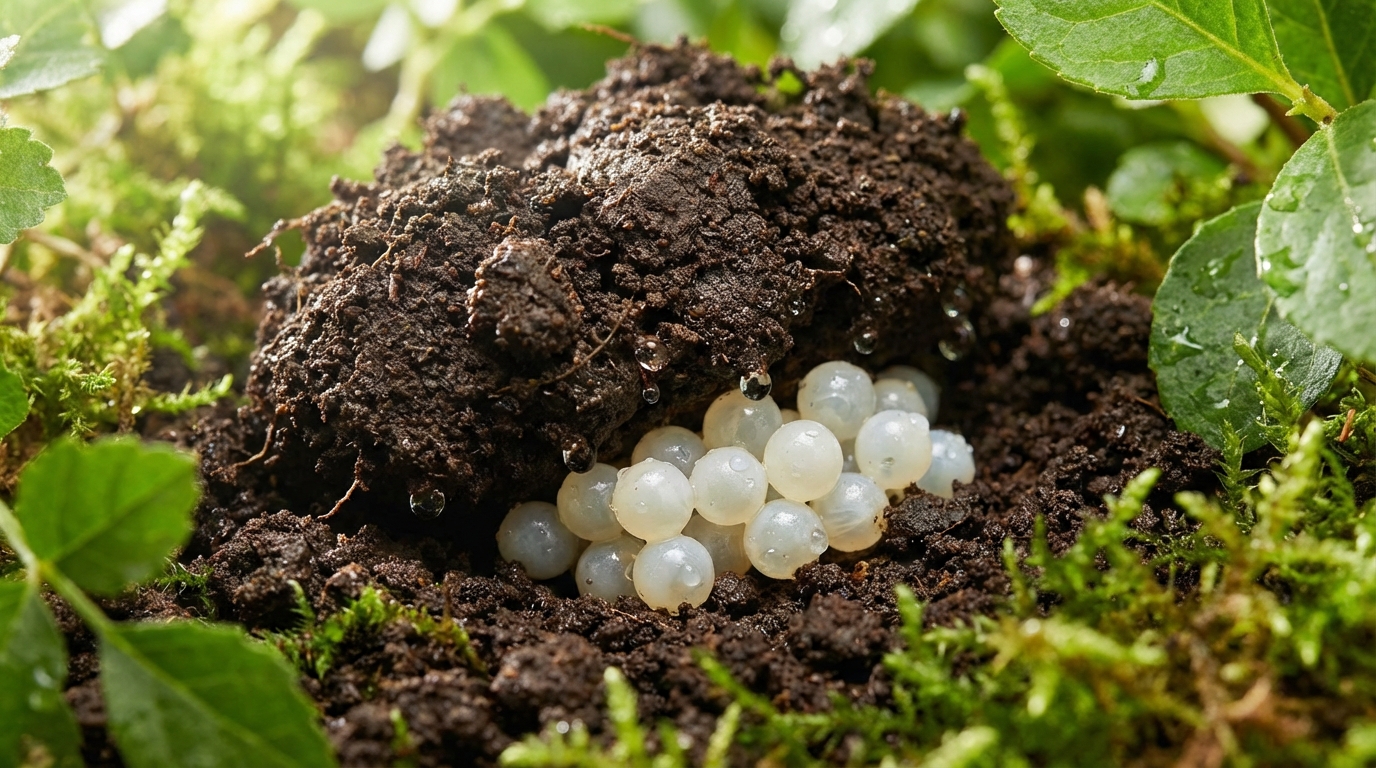
Snails are hermaphrodites, which is a major biological advantage. Every snail has the potential to lay eggs. They don’t need to find a specific male or female. They just need to find another snail. This means their population can double or triple much faster than other creatures. After a damp spring, you might find clusters of small, pearly white eggs in the soil. Each one of those is a future plant-eater. If you see them while digging, it’s best to leave them out for the birds.
Their shells are also more than just a house. It’s a part of their body. If a snail gets a small crack in its shell, it can actually repair it. They use the calcium they’ve consumed to secrete new material and patch the hole from the inside. It’s not a perfect fix, and a major break is usually fatal, but their ability to self-heal is incredible. It’s another reason why they’ve survived for millions of years. They are built for durability and recovery.
Common Garden Snail Questions
Do snails feel pain?
While we don’t know for sure if they feel pain exactly like humans do, they definitely have a nervous system and respond to negative stimuli. They will pull away from heat, salt, or sharp objects. This is why I prefer deterrents over salt. Salt is a pretty brutal way for them to go, as it essentially dehydrates them instantly. Barriers are much more humane.
How long do garden snails live?
In the wild, most snails live about 2 to 3 years. However, in a safe environment without predators, some can live up to 5 or even 10 years. Their lifespan is largely determined by how well they can hide and whether they can find enough calcium to keep their shells strong.
Are all snails bad for the garden?
Not necessarily. Most snails eat decaying plant matter and algae, which actually helps clean up the garden. They only become a problem when they run out of the “junk food” and start eyeing your fresh seedlings. A few snails here and there are actually a sign of a healthy, moist ecosystem.
Can snails climb over anything?
Almost anything. Because of their unique mucus, they can navigate thorns, glass, and even vertical walls. The only things that really stop them are very dry, powdery surfaces like wood ash or diatomaceous earth, and metals like copper that cause a chemical reaction with their slime.
At the end of the day, snails are a permanent part of the gardening experience. You can’t really get rid of a creature that can sleep for three years and move over razor blades. But by understanding their hidden superpowers, you can learn to manage them. Keep things dry where you don’t want them, use barriers where it matters, and maybe take a second to appreciate the fact that you’ve got a thousands-of-teeth, self-repairing, slime-sliding marvel living under your porch.