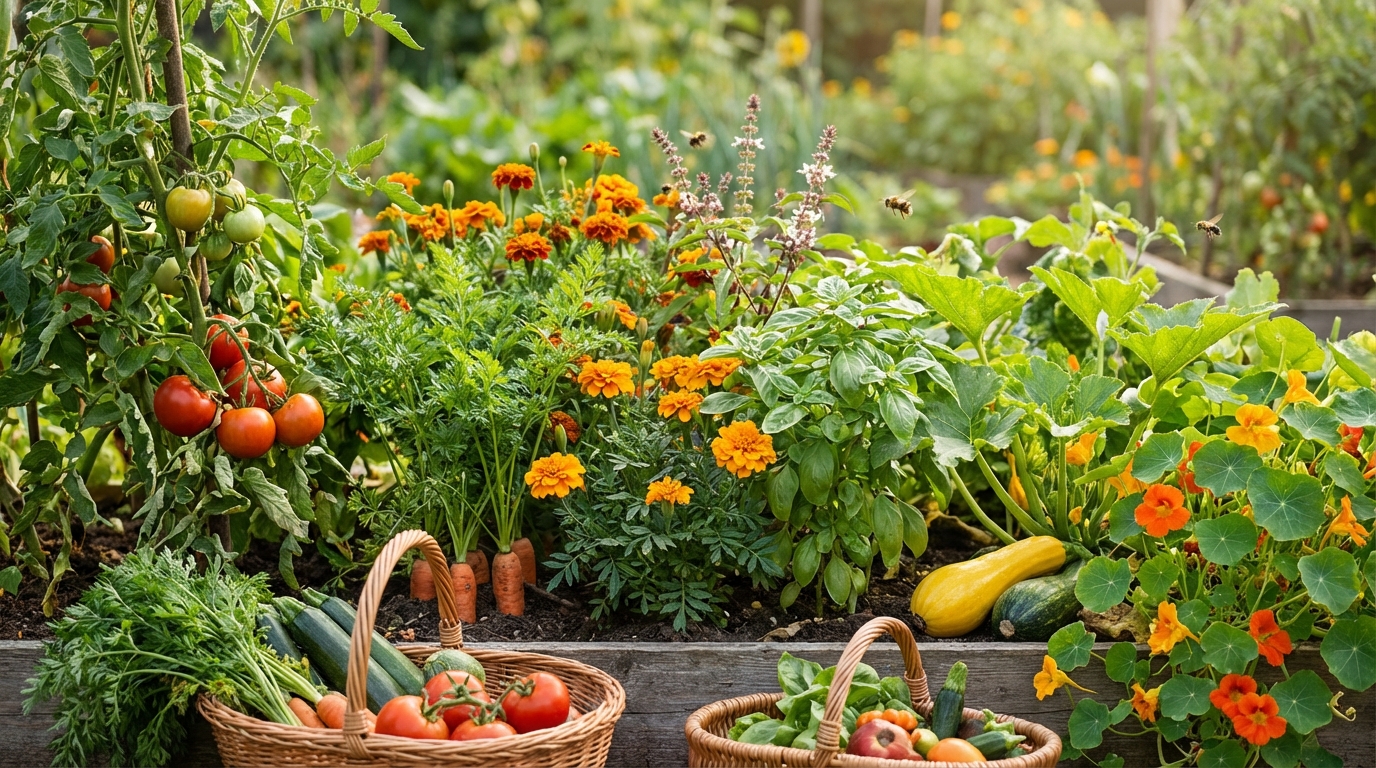
If you have ever looked at a tiny backyard or a single raised bed and felt like you were playing a losing game of Tetris with your vegetable starts, you are not alone. Most of us start out thinking gardening is about straight lines and single-crop rows. I did exactly that years ago with my first garden. I planted a massive block of kale, feeling very proud of my neat, tidy rows. Within two weeks, every cabbage looper in the neighborhood had RSVP’d to the party. My garden was a skeleton before I even got a harvest. That was my first hard lesson: nature hates a monoculture. If you want a garden that actually produces, you have to stop thinking about plants as individuals and start thinking about them as a community.
- Maximizing space: Mix tall and short plants to use every inch of soil.
- Natural defense: Smelly herbs confuse pests that want to eat your veggies.
- Soil health: Different plants use different nutrients, preventing soil exhaustion.
- Better flavor: Some pairings actually improve the taste of your harvest.
This is where companion planting comes in. It is not some mystical garden legend. It is a practical, data-backed way to maximize garden yield while doing less work. By placing specific plants next to each other, you create a tiny ecosystem where the plants help each other grow. Some provide shade, others fix nitrogen in the soil, and some act as a living shield against pests. In a small space, this strategy is not just a bonus. It is the only way to get a massive harvest from a few square feet.
How companion planting actually works in small spaces
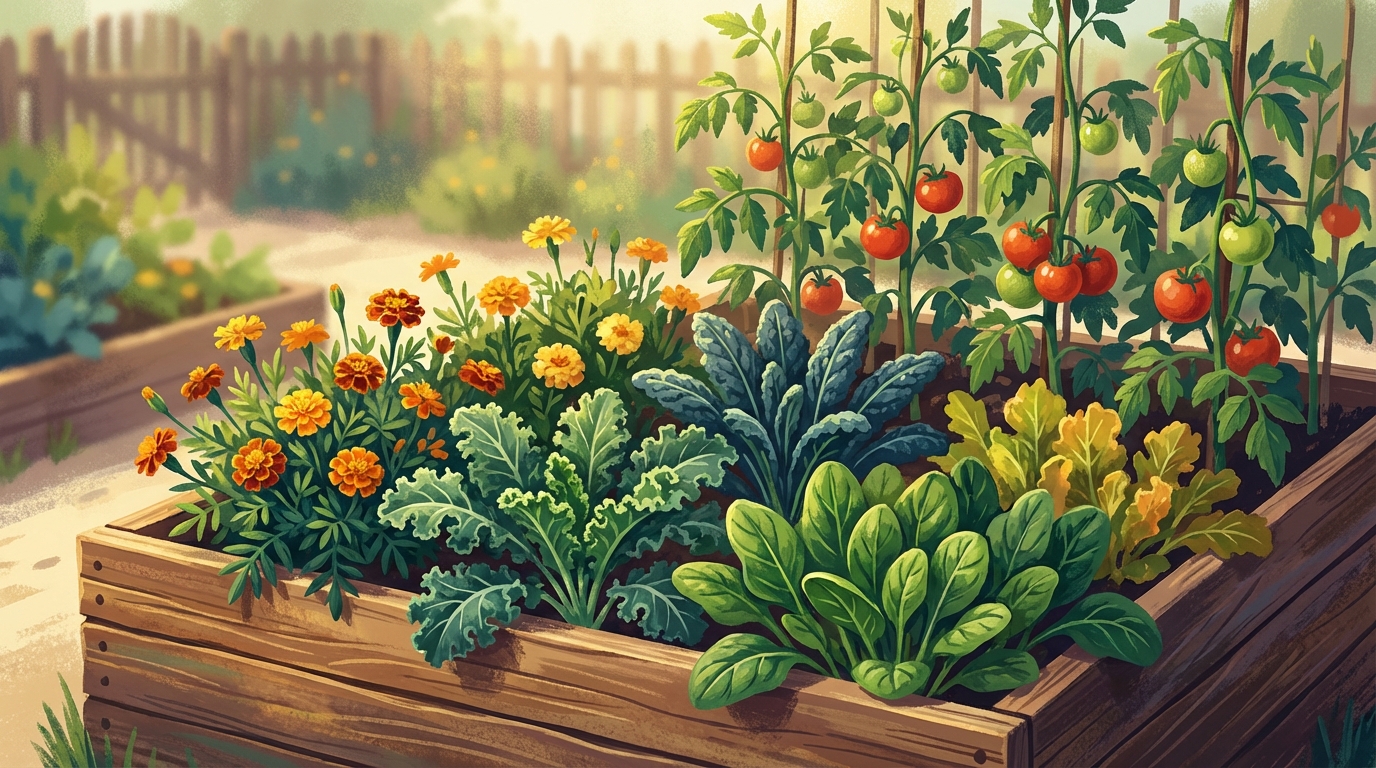
The core idea here is intensive gardening. When you have limited room, you cannot afford to have empty dirt between your plants. Empty dirt is an invitation for weeds. Instead, we use every available bit of sunlight and soil. But you cannot just jam plants together and hope for the best. They need to be compatible roommates. Here is what a thriving companion garden needs to succeed.
Light requirements: Most fruiting vegetables, like tomatoes and peppers, need at least 6 to 8 hours of direct sun. However, leafy greens like spinach and lettuce actually prefer a bit of shade when the summer heat kicks in. By planting lettuce under the canopy of a tall tomato plant, you use the same footprint to get two different harvests.
Soil and nutrients: Think of your soil as a bank account. If every plant is a “heavy feeder” (like corn or broccoli), they will drain the account quickly. Companion planting lets you balance the budget. I like to pair heavy feeders with “light feeders” or nitrogen fixers like beans and peas. This keeps the soil from becoming a barren wasteland by mid-July.
Watering needs: Do not pair a drought-tolerant herb like rosemary with a water-hungry plant like a cucumber. You will end up either drowning the herb or dehydrating the veggie. Group your plants by their thirst levels. It makes your morning watering routine much faster and keeps your plants from stressing out.
Smart vegetable pairings that double your harvest
I have spent over a decade testing different combinations in my own backyard. Some work brilliantly, and others are a total bust. If you are just starting out, stick to these four classic pairings. They are popular because they actually work, and they are perfect for beginners who want immediate results.
The classic tomato and basil duo
This is the gold standard of companion planting. Tomatoes are notorious for attracting hornworms, which can strip a plant in a single night. Basil has a very strong scent that masks the smell of the tomato plant, making it much harder for pests to find. Plus, many gardeners (including myself) swear that tomatoes grown next to basil simply taste better. It is like they are already prepping themselves for a caprese salad while still on the vine. Keep your basil tucked right at the base of the tomato plants to keep the soil cool and moist.
Protecting root vegetables with onions and garlic
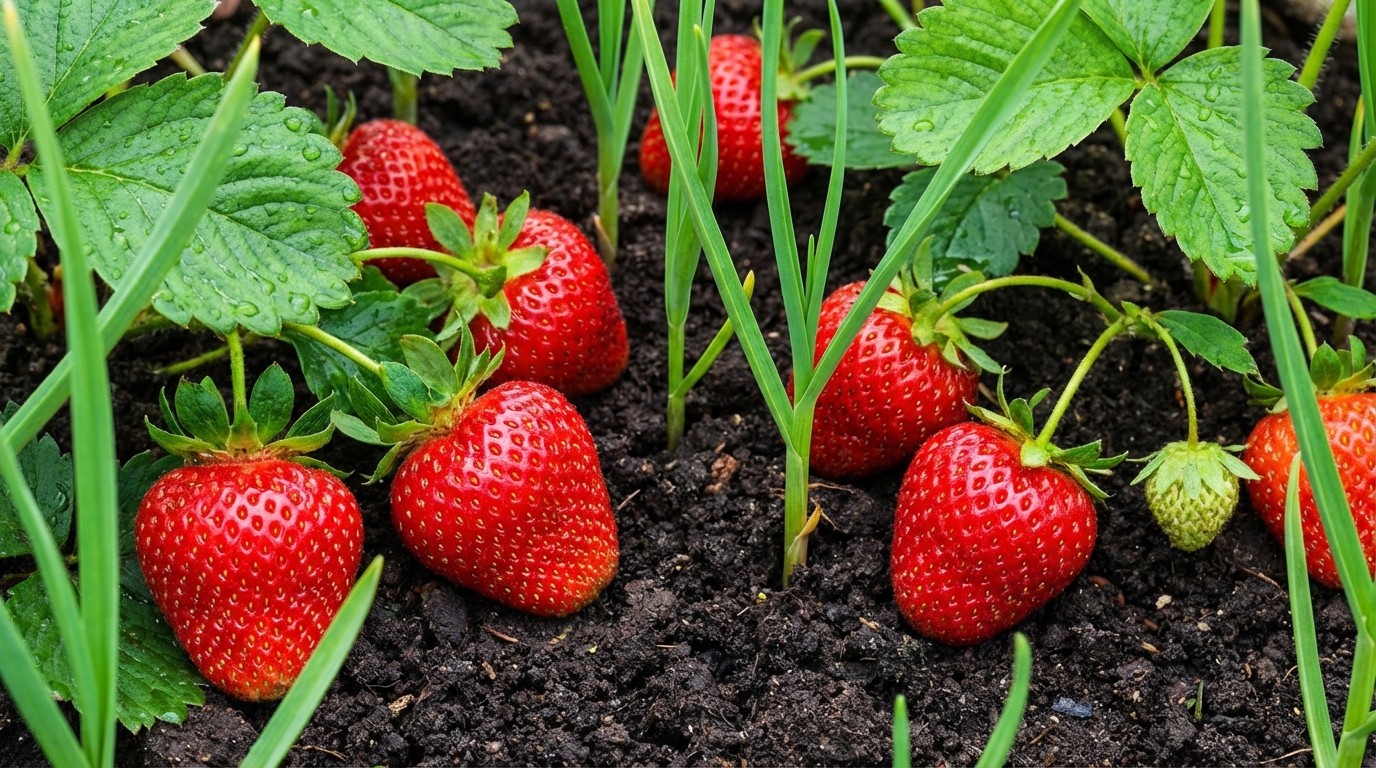
Carrots are a backyard staple, but the carrot rust fly is a real nightmare. These tiny pests find your carrots by scent. Onions, leeks, and garlic have such an overpowering aroma that they act as a biological cloaking device for your carrots. On the flip side, carrots help loosen the soil as they grow, which benefits the shallower roots of the onion family. It is a win-win for both plants. If you are dealing with strawberries, try tucking a few cloves of garlic between the plants. Garlic is a natural fungicide and helps prevent the mold issues that often plague berry patches.
Using dill to protect your cucumbers
Cucumbers are prone to beetles and aphids. Dill is an incredible companion because it attracts predatory insects like wasps and ladybugs. These “good bugs” act as a natural security detail, eating the pests before they can damage your vines. Just a quick tip from my experience: do not let the dill get too huge or it might start to crowd out the cucumber seedlings. Keep it trimmed or plant it on the edge of the bed.
Natural ways to keep pests away without chemicals
One of the biggest mistakes I see beginners make is reaching for a bottle of pesticide the moment they see a bug. Here is the thing: most pesticides kill the good bugs along with the bad ones. Once you kill off your ladybugs and spiders, the pest population will actually explode because there are no natural predators left to keep them in check.
Natural pest control relies on diversity. I always interplant flowers like marigolds and nasturtiums among my vegetables. Marigolds produce a chemical in their roots that repels nasty soil nematodes, while nasturtiums act as a “trap crop.” Aphids love nasturtiums even more than they love your kale. By planting them nearby, the aphids flock to the flowers, leaving your dinner-to-be alone. It is a simple shift in mindset: you are not just growing food, you are managing a small ecosystem.
Common mistakes to avoid:
- Crowding too much: While intensive planting is good, plants still need airflow. If things are too tight, you will end up with powdery mildew.
- Ignoring height: Make sure your tall plants are on the north side of your garden so they do not block the sun for everything else.
- The wrong neighbors: Never plant onions near beans or peas. Onions actually produce a chemical that can stunt the growth of legumes. I learned that one the hard way with a very sad patch of pole beans.
Essential requirements for a thriving small garden
To get the most out of these pairings, you need to set the stage correctly. Organic gardening is easier when the environment is right. Start with high-quality compost. I cannot stress this enough. If your soil is dead, your plants will be weak, and no amount of companion planting will save them. Weak plants are like a neon sign for pests.
Temperature is another big factor. Do not rush your summer crops into the ground. Tomatoes and basil are tropical plants. If the soil is still cold, they will just sit there and rot, regardless of who their neighbors are. Wait until the night temperatures are consistently above 50 degrees Fahrenheit. While you wait, you can use that space for quick-growing companions like radishes or green onions that love the cool spring air.
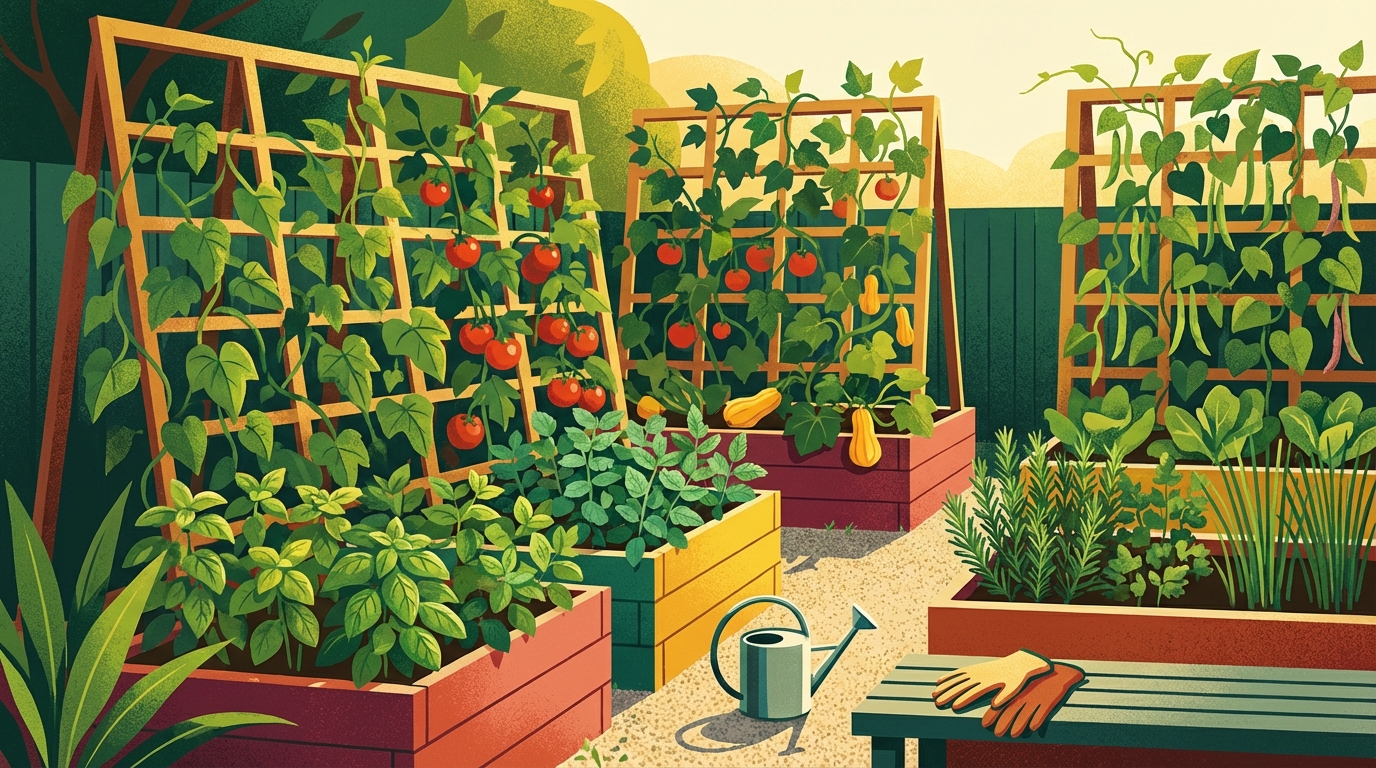
Vertical space is your secret weapon for a garden yield boost. If you are growing cucumbers, squash, or peas, give them a trellis. This opens up the soil surface for shorter companions like spinach or herbs. By growing “up” instead of “out,” you can easily triple the amount of food you produce in the same footprint. I once managed to grow thirty pounds of tomatoes and ten pounds of cucumbers in a single 4×4 raised bed just by using vertical supports and smart pairings.
“The best fertilizer is the gardener’s shadow. By spending just five minutes a day looking at your plant pairs, you catch small problems before they become big disasters.”
How to get started this weekend
Do not feel like you have to memorize a giant chart to succeed. Start small. Pick one “anchor” plant you love to eat, like tomatoes, and then find two companions to go with it. Maybe that is basil and some marigolds. Next season, add another group. The goal is to make your garden a place where you want to spend time, not a source of stress.
Look at your garden as a puzzle. Every plant has a shape, a scent, and a set of needs. When you find the pieces that fit together, the garden almost takes care of itself. You will find yourself using fewer chemicals, spending less time weeding, and harvesting more food than you ever thought possible in a small space. It is a more natural, more rewarding way to grow. And honestly, it is just a lot more fun to see a monarch butterfly landing on your dill while you pick fresh tomatoes for dinner.
Frequently Asked Questions
Can I use companion planting in containers?
Absolutely. Container gardening is actually one of the best places for this. A large pot can easily hold one tomato plant and two or three basil starts. Just make sure the pot has plenty of drainage and you are using a high-quality potting mix. You may need to fertilize more often since roots are confined to a small space.
Will companion planting completely get rid of all pests?
No, and you probably do not want it to. A healthy garden has a few “bad” bugs to provide food for the “good” bugs. The goal of natural pest control is to keep the damage to a minimum so your plants can still thrive and produce. Think of it as management, not total eradication.
How do I know which plants are heavy feeders?
Generally, if the plant produces a large fruit (like a pumpkin, tomato, or corn) or a large head (like broccoli or cabbage), it is a heavy feeder. Leafy greens and herbs are usually light feeders. Root crops fall somewhere in the middle. Always rotate your heavy feeders to a different spot each year to keep the soil healthy.
Success in the garden does not come from perfection. It comes from observation. Take notes on what worked and what didn’t. Maybe your basil did better on the east side of the tomatoes this year. Write it down. Over time, you will develop a gut feeling for what your specific patch of earth needs. Happy planting!