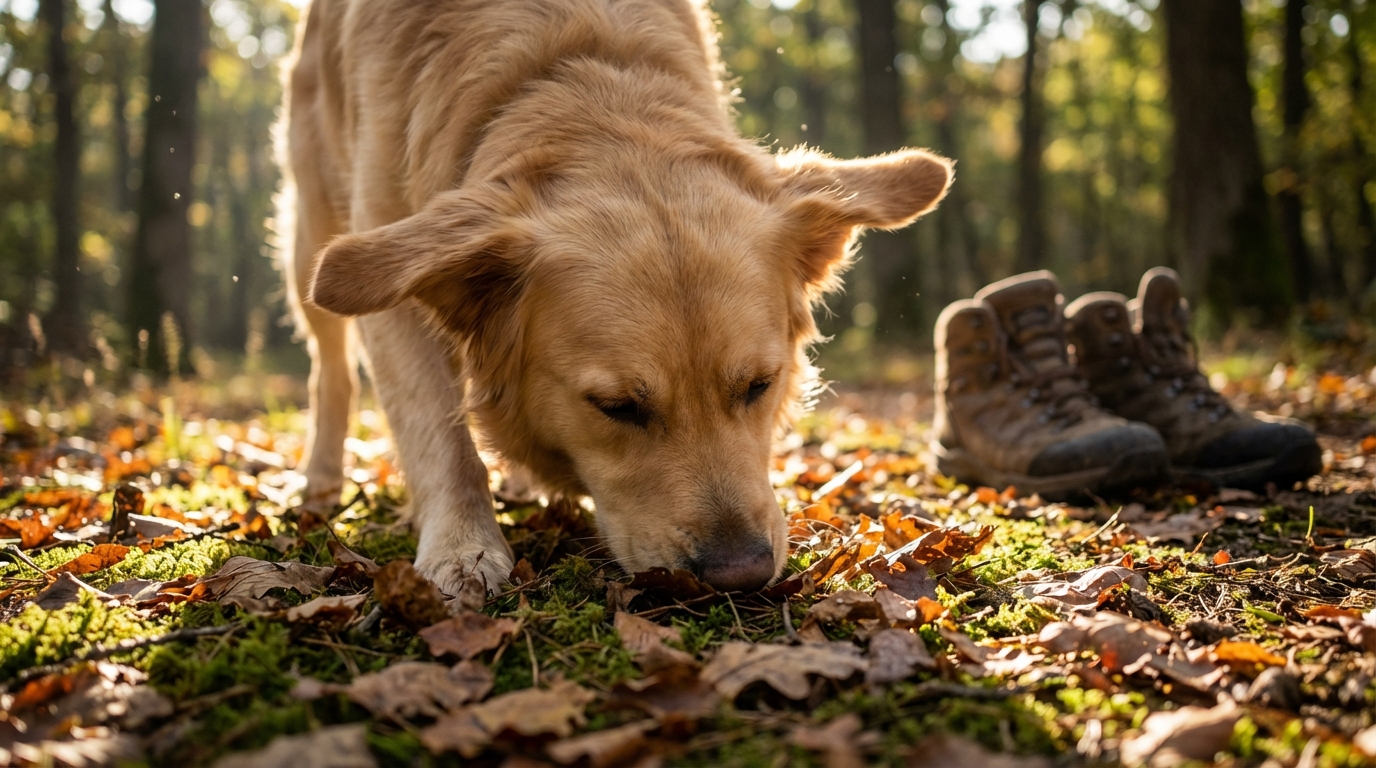
I was standing on the corner of 4th and Main last Tuesday, tugging gently on the leash while my Beagle, Cooper, remained absolutely glued to a specific patch of brown grass. To me, it was just a dead spot in the lawn. To Cooper, it was clearly the most riveting long-form essay ever written. He wasn’t just sniffing, his whole body was vibrating with the intensity of the information he was absorbing. It made me realize, for the thousandth time, that while I’m looking at the sunset, he’s reading the history of every dog that passed this spot in the last forty-eight hours. This is the reality of animal olfactory superiority, a sensory superpower that makes our human noses look like broken toys in comparison.
- Most animals possess a scent-processing capability that is thousands of times more powerful than ours.
- Bears can detect a food source from nearly 20 miles away, setting the gold standard for scent range.
- Allowing your dog to sniff during walks is actually a form of deep mental exercise and decompression.
- Cats use a specialized organ in the roof of their mouth to “taste” the air and gather data.
We often talk about the bond we share with our pets through cuddles and eye contact, but there’s an entire invisible world between us that we barely acknowledge. It’s a landscape made of molecules and pheromones. While we rely on our eyes to navigate the grocery store or find our car keys, our pets are using their noses to map out their entire existence. I’ve spent years writing about pet behavior, and I’m still blown away by the sheer scale of the biological gap between us and them when it comes to the nose.
The massive gap between human and animal scent ranges
To really get a handle on animal olfactory superiority, you have to look at the numbers. They’re almost comical. A human can generally pick up a scent from about 1.5 meters away if the wind is right and the smell is strong enough. Think about that. That’s about the length of a standard leash. If someone is grilling burgers next door, you’ll know it, but you’re not exactly tracking a single molecule across a zip code.
Now, compare that to a cat. A typical domestic cat can pick up scents from quite a bit further, but they are localized hunters. Then you have the heavy hitters. A bloodhound can track a scent trail that is over 300 hours old. But the absolute king of the hill? That would be the bear. Data shows that a black bear can smell food from up to 30 kilometers away. That is roughly 18 to 20 miles. Imagine being in the middle of a city and smelling a fresh steak being cooked three towns over. That’s the level of sensory input we’re talking about.
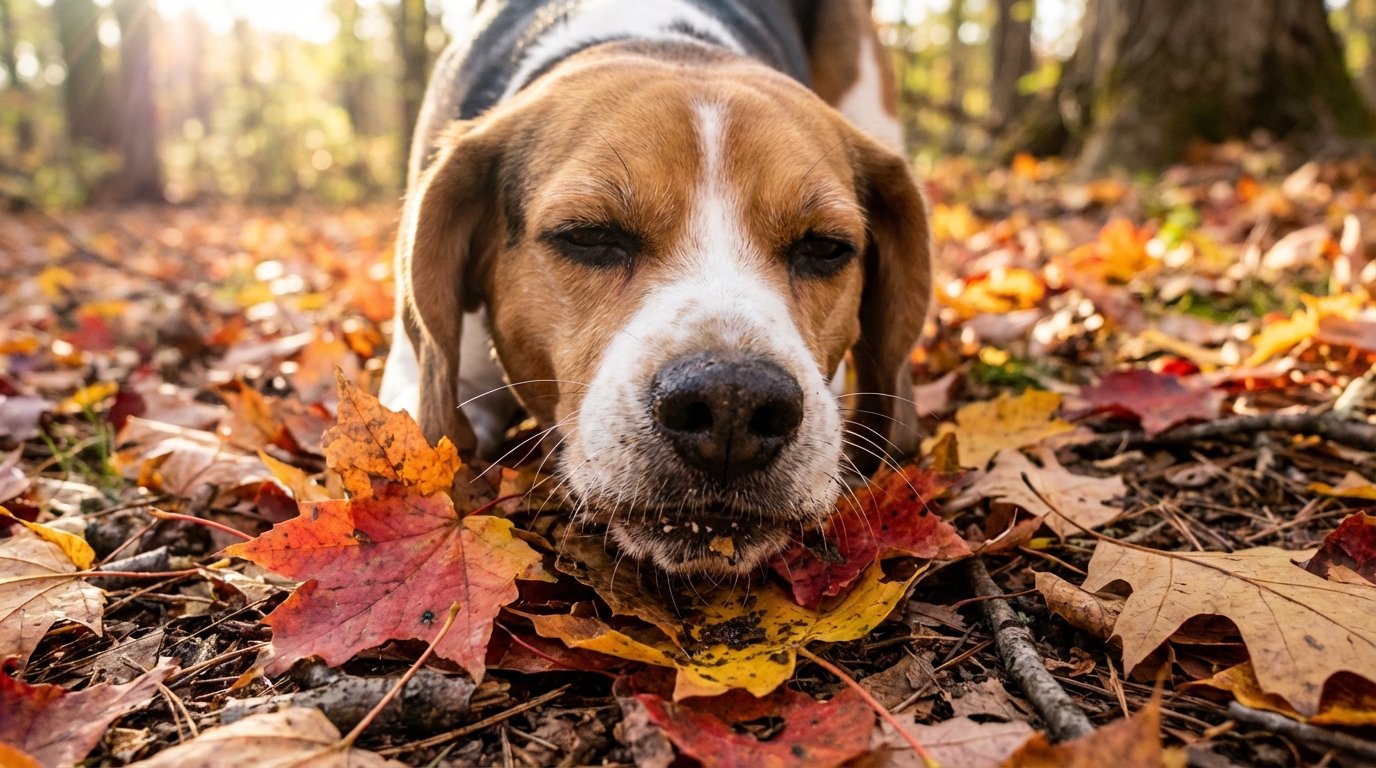
It isn’t just about distance, though. It’s about the depth of the data. When we smell coffee, we smell coffee. When a dog smells coffee, they smell the beans, the water, the cream, the sugar, and the fact that the barista has a cat at home. Their brains are wired to deconstruct every scent into its individual components. This is why a dog can find a single dropped penny in a hayfield or detect a change in a person’s blood sugar levels before the person even feels a symptom. It’s not magic, it’s just superior biology.
Why your dog treats every walk like a library visit
I see it all the time at the park. A frustrated pet parent is pulling on their dog’s collar, trying to get them to “just keep moving” so they can finish their loop and get back to work. I’ve been guilty of it too. But when we do that, we’re basically closing the book while our dog is in the middle of a juicy chapter. For a dog, sniffing isn’t a hobby. It’s their primary way of collecting social media updates from the neighborhood.
They’re checking “pee-mail.” That fire hydrant isn’t just a piece of utility equipment. It’s a community bulletin board. By sniffing it, your dog learns who was there, how long ago they passed by, what their health status is, and even what their mood was at the time. Research suggests that animal olfactory superiority allows dogs to perceive time through scent. Newer smells are “bright” and “loud,” while older smells are “faint.” By following a trail, they are literally walking through a timeline of events.
- The Olfactory Bulb: In dogs, the part of the brain dedicated to smelling is about 40 times larger than ours, proportionally speaking.
- Moist Noses: That cold, wet nose actually helps capture scent particles from the air, acting like a magnet for molecules.
- Independent Nostrils: Dogs can wiggle each nostril independently, allowing them to determine the exact direction a smell is coming from.
So, the next time you’re out and your pup refuses to budge from a tuft of clover, try to be patient. They aren’t being stubborn. They’re just catching up on the local news. I’ve started calling these “sniffaris.” The goal isn’t distance or speed, it’s just letting the dog lead with their nose. It’s the most mentally exhausting thing they can do, and ten minutes of heavy sniffing is often more tiring for them than a thirty-minute run.
The secret sensory tools of our feline friends
Cats are a bit more subtle about their animal olfactory superiority, but they’re no slouches. Have you ever seen your cat sniff something and then leave their mouth hanging open in a weird, goofy grimace? It looks like they’ve just tasted something terrible, but they’re actually doing something incredibly smart called the Flehmen response.
They’re using the vomeronasal organ, also known as the Jacobson’s organ, located in the roof of the mouth. By opening their mouth, they’re pulling scent molecules directly toward this organ, which processes pheromones. This allows them to gather a level of social and biological data that goes way beyond what a standard nose can do. It’s like having a second, more specialized nose hidden inside their mouth. Cats use this to identify friends, enemies, and potential mates, and to navigate their territory with pinpoint accuracy.
I once watched my cat, Luna, spend ten minutes investigating a shopping bag I’d brought home. She wasn’t looking for food. She was cataloging every single person who had touched that bag and every environment it had sat in. To her, that bag was a travelogue of my entire afternoon. It’s a humbling thought, knowing our pets know our secrets just by catching a whiff of our sleeves.
How to lean into your pet’s natural talents at home
Since we know our pets are living in this rich, aromatic world, it only makes sense to help them enjoy it. Most behavioral issues in pets stem from boredom. If we don’t give their brains something to do, they’ll find something to do (usually involving your favorite pair of shoes). Using their natural animal olfactory superiority is the easiest way to keep them happy and balanced.
You don’t need expensive equipment for this. One of my favorite rainy-day activities is the “muffin tin game.” Take a muffin tin, put a few small treats in a couple of the holes, and then cover every hole with a tennis ball. Your dog has to use their nose to figure out which balls are hiding the goods. It’s simple, it’s cheap, and it keeps them focused for ages. For cats, you can hide small bits of dried catnip or high-value treats around the house on different levels, forcing them to hunt with their noses instead of just waiting for a bowl to be filled.
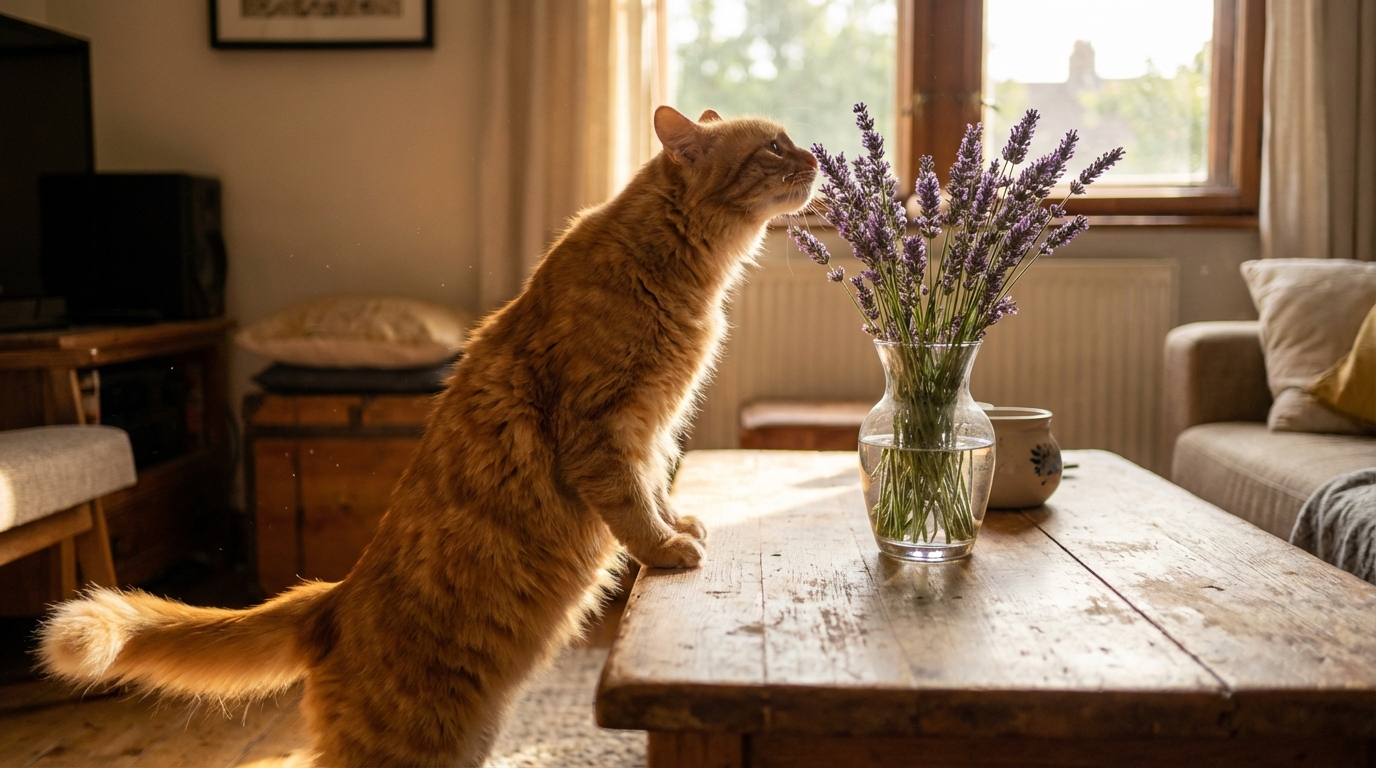
Also, think about the smells you bring into your home. We love our scented candles and essential oil diffusers, but for an animal with a nose that’s 100,000 times more sensitive than ours, those scents can be overwhelming. I’ve seen dogs get visibly anxious or start sneezing uncontrollably because a plug-in air freshener was too intense. Always make sure your pet has a “scent-free” zone where they can escape if the smells of your latest cleaning spree become too much for them.
The emotional weight of a familiar scent
There’s a reason your dog sleeps on your dirty laundry when you’re away. It’s not just that it’s soft. It’s because you are on it. To your pet, your scent is the ultimate comfort. It’s a physical manifestation of safety and love. When we understand animal olfactory superiority, we start to see these little quirks as deeply emotional connections.
I remember talking to a friend whose dog was struggling with separation anxiety. We tried everything, but what finally worked was a simple trick: she slept in an old t-shirt for two nights and then left it in her dog’s crate. That concentrated scent of “Mom” was enough to lower the dog’s heart rate and help him settle. We might think it’s gross to leave a sweaty shirt out, but to a dog, that shirt is a warm hug that lasts all day long.
This deep connection to scent is also why older pets, who might be losing their sight or hearing, can often still navigate their world quite well. As long as their nose is working, they aren’t truly lost. They can still find their bed, their food, and most importantly, they can still find you. It’s their anchor in the world, and there’s something incredibly beautiful about that.
Frequently Asked Questions
Can dogs really smell human emotions?
Yes, in a way. When we feel fear, stress, or even happiness, our bodies release different hormones and chemicals through our sweat and breath. Thanks to animal olfactory superiority, dogs can detect these subtle chemical shifts. They aren’t necessarily “reading your mind,” but they are definitely reading your chemistry. This is why your dog often knows you’re having a bad day before you’ve even said a word.
Is it true that bears have the best sense of smell in the animal kingdom?
While “best” can be subjective, bears are widely considered the gold standard for land mammals. Their olfactory bulb is five times larger than a human’s, despite their brains being smaller overall. This allow them to find carcasses, mates, and even cubs across vast distances. Some researchers believe their sense of smell is actually seven times stronger than a bloodhound’s.
Why does my dog sniff other dogs’ rear ends?
It’s basically a digital handshake. The anal glands of a dog contain a wealth of information including their diet, gender, and health status. Because of animal olfactory superiority, a quick sniff provides a dog with a full biography of the stranger they’ve just met. It’s the most efficient way for them to communicate and establish social boundaries without having to use physical aggression.
At the end of the day, acknowledging that our pets live in a different sensory reality helps us become better companions. We can’t see the world the way they do, but we can respect it. We can slow down on our walks, choose pet-safe scents for our homes, and recognize that when our dog is staring at a blank wall, they might actually be listening to a very interesting “smell” coming through the floorboards. It’s a wild, invisible world out there, and we’re just lucky our pets let us tag along for the ride.